What Is Earnest Money? Complete Guide for Home Buyers and Investors
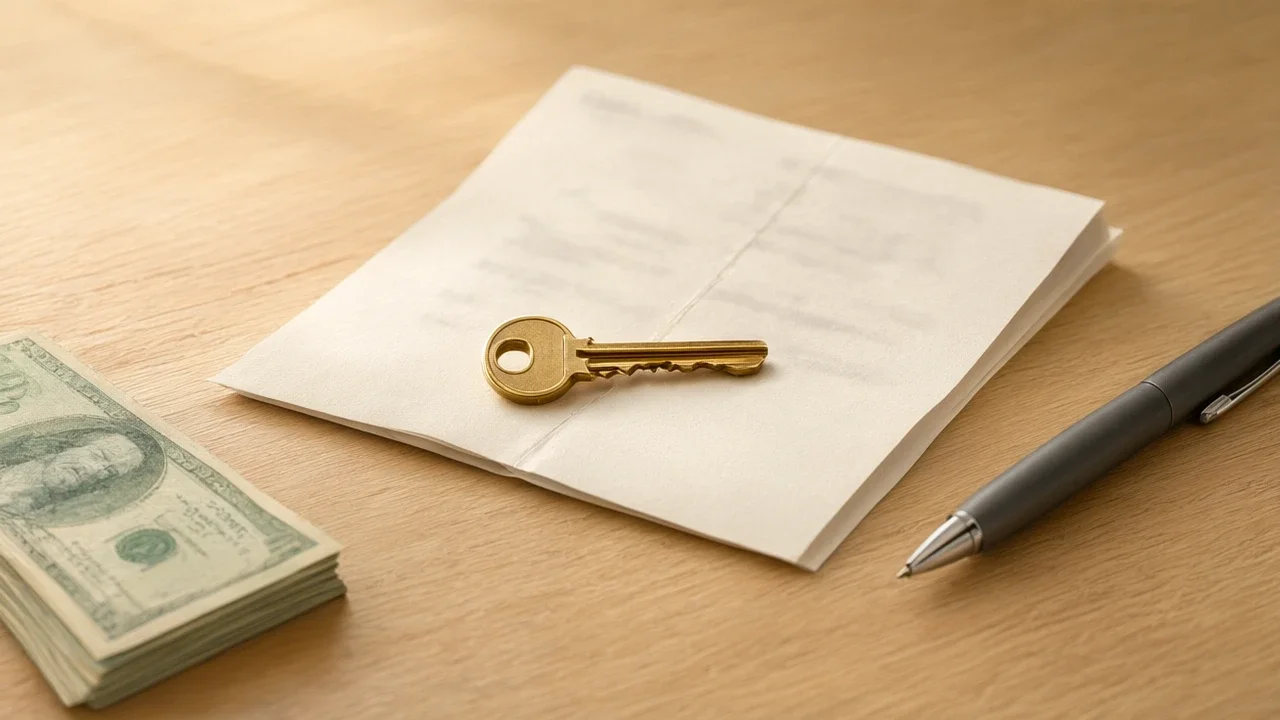
Earnest money is a good-faith deposit that a buyer pays to a seller’s escrow account after their offer is accepted. It shows serious intent to complete the real estate transaction. The amount is typically 1-3% of the purchase price, delivered within 1-3 business days, as set in the contract, via bank wire or ACH transfer. If the deal closes, the earnest money is credited toward the down payment or closing costs. If the buyer defaults without a valid contingency, the seller keeps the deposit.
This guide covers everything you need to know about earnest money. For the broader funding context, see our real estate funding guide.
What Is Earnest Money? The Simple Definition
Earnest money (sometimes called a good faith deposit or EMD, short for earnest money deposit) is a sum of money paid by the buyer to the seller’s escrow account shortly after the purchase contract is signed. The deposit shows the seller that the buyer is “in earnest”, genuinely committed to completing the purchase.
Without earnest money, a purchase contract is just a promise. With it, the buyer has real cash at risk, which gives the seller confidence to take the property off the market. If the buyer walks away without a valid reason, the seller keeps the deposit as compensation for lost time and opportunity.
Why Sellers Ask for Earnest Money
Sellers ask for earnest money for three reasons:
- Commitment signal: A buyer who has put $6,000 at risk is far less likely to walk away than one who has not.
- Opportunity cost coverage: While the property is under contract (30-60 days), the seller cannot accept other offers. The EMD compensates for this risk.
- Market custom: In most US markets, an EMD is expected. An offer without one is not taken seriously.
In competitive markets, a higher EMD (3-5%) signals financial strength and commitment, making the offer more attractive to the seller.
How Much Earnest Money Should You Offer?
The standard recommendation is 1-3% of the purchase price:
| Purchase Price | 1% EMD | 2% EMD | 3% EMD |
|---|---|---|---|
| $200,000 | $2,000 | $4,000 | $6,000 |
| $300,000 | $3,000 | $6,000 | $9,000 |
| $400,000 | $4,000 | $8,000 | $12,000 |
| $500,000 | $5,000 | $10,000 | $15,000 |
| $1,000,000 | $10,000 | $20,000 | $30,000 |
In hot markets, 3-5% makes offers stronger. In some attorney states (like New York), 10% is common for higher-value transactions. According to the National Association of Realtors, earnest money is typically 1-3% of the purchase price.
Is Earnest Money Refundable?
Contingencies That Protect Your Deposit
Yes, earnest money is refundable if you cancel under a valid contingency. Common contingencies:
- Financing contingency: If your loan is denied, the EMD is refunded
- Inspection contingency: If the inspection reveals significant issues, you can cancel and recover the deposit
- Appraisal contingency: If the property appraises below the purchase price, you can walk away
For full details, see our is earnest money refundable guide.
When You Can Lose Your Earnest Money
You forfeit the EMD if you default without a valid contingency, or if you miss a contingency deadline. If the inspection contingency expires in 10 days and you notify the seller on day 12, the contingency is waived and you may lose the deposit.
Does Earnest Money Go Toward Your Down Payment?
Yes. At closing, the EMD is credited directly to your down payment or closing costs. On a $300,000 purchase with a 10% down payment ($30,000) and a $6,000 EMD, you bring $24,000 to closing. The EMD reduces your cash-at-closing by the deposit amount. See our guide on does earnest money go toward down payment for the full calculation.
Earnest Money Deposit vs Down Payment: What’s the Difference?
| Feature | Earnest Money | Down Payment |
|---|---|---|
| Purpose | Good-faith commitment | Equity in the property |
| Amount | 1-3% of price | 3.5-25% of price |
| When paid | At contract signing | At closing |
| Refundable | Yes, with contingencies | No — becomes your equity |
| Applied at closing | Credited toward down payment | Becomes ownership stake |
For the full comparison, see earnest money deposit vs down payment.
How to Fund Your Earnest Money Deposit Fast
If you do not have $6,000-$12,000 in liquid cash when your offer is accepted, you have 1-3 days to fund the EMD. Options:
- Personal savings: $0 cost, instant. The best option if available
- HELOC: ~$110 on $15,000 over 30 days at 9% APR
- Credit-to-cash (Kashu): $1,275 on $15,000 at 8.5% flat fee, same-day via ACH. No new debt, no UCC lien
- Business line of credit: ~$185 on $15,000 over 30 days at 15% APR
A merchant cash advance (MCA) at factor 1.3 would cost $4,500 on $15,000. That is 3.5× more expensive than credit-to-cash, with daily deductions that drain cash flow during the escrow period. For real estate investors, this is structurally inappropriate.
Frequently Asked Questions About Earnest Money
What is earnest money in real estate?
Earnest money is a good-faith deposit (typically 1-3% of the purchase price) that a buyer pays to an escrow account within 1-3 days of the purchase contract being signed. It shows the seller the buyer is serious and is credited toward the down payment at closing.
How much earnest money do I need?
Typically 1-3% of the purchase price. On a $400,000 home, expect $4,000-$12,000. In competitive markets, 3-5% makes your offer stronger.
Is earnest money refundable?
Yes, if you cancel under a valid contingency (financing, inspection, appraisal). If you default without a contingency, the seller keeps the deposit.
Does earnest money go toward the down payment?
Yes. At closing, the EMD is credited toward your down payment or closing costs, reducing the cash you need to bring to the closing table.
This article is for informational purposes only and does not constitute financial or legal advice. Consult a licensed real estate professional before making purchase decisions.
Disclosure: This article contains affiliate links. We may receive compensation at no additional cost to you.